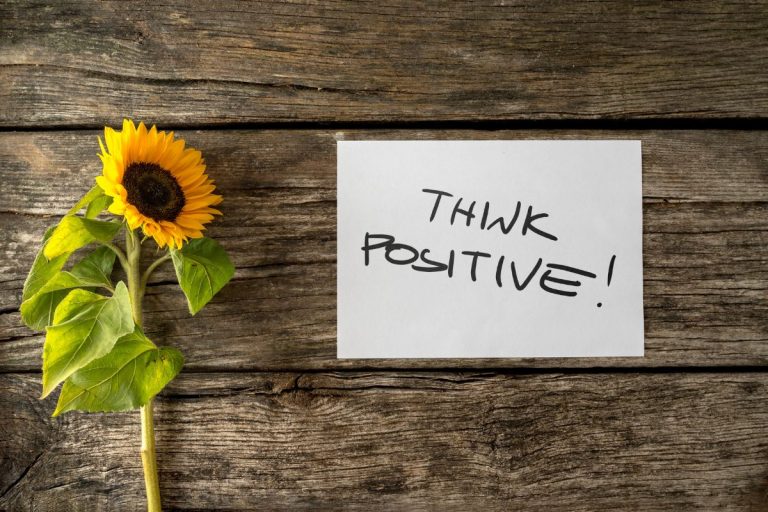


The role of positive thinking in mental health recovery is something I underestimated for years, mostly because I confused it with pretending everything was fine. That’s not what it is, and honestly, that misunderstanding kept me stuck longer than it should have.
Recovery isn’t a straight line, and nobody heals by deciding to feel better on command. But the way you think about your own healing, day after day, genuinely shapes how far you get. I’ve watched it happen in my own life, and I’ve watched it happen in people I love.
I remember sitting in a support group years ago, nodding along to advice that felt completely disconnected from what I was actually going through.
It took me a long time to figure out that real positive thinking looks nothing like that performance. It looks more like choosing, again and again, to believe recovery is possible even on the days it doesn’t feel true yet. That reframe changed the entire trajectory of my recovery, even though nothing about my actual circumstances had changed yet.
How Does It Actually Support Recovery?
It supports recovery by changing how you interpret setbacks while you’re still in the middle of them. A hard day stops meaning “I’m failing at this” and starts meaning “this is part of the process.”
That shift sounds small. It isn’t. Your recovery journey is made up of hundreds of these tiny interpretations, and each one either pulls you forward or drags you backward.
Positive psychology research backs this up consistently: people who frame struggle as temporary and workable tend to stick with treatment longer and recover more fully than people who frame every setback as proof they’re broken.
This is why relapse doesn’t erase progress the way it feels like it does in the moment. A setback is data about what still needs support, not evidence the whole effort was wasted.
I think about a friend from an old support group, someone who treated every relapse like proof she’d failed for good. Once she started treating setbacks as information instead of a verdict, something in her shifted. She wasn’t cured overnight, but she stopped quitting on herself every time things got hard.
What Does the Science Say About the Brain and Recovery?
The science says your brain physically changes based on the thoughts you repeat, a process called neuroplasticity. Every time you catch a spiral before it takes over, you’re strengthening a different neural pathway than the one that spiral usually takes.
This isn’t wishful thinking dressed up in scientific language. According to a systematic review of neuroimaging studies, in the Journal of Neuropsychiatry and Clinical Neurosciences, cognitive behavioral therapy exists because researchers found that changing thought patterns changes brain function, not only mood.
I dug into the science behind positive thinking a while back and it genuinely changed how seriously I took my own mental self-talk.
Mindfulness plays into this too. When you’re aware enough to notice a negative thought as it happens, you get a choice point you’d otherwise miss entirely.
None of this requires you to become a neuroscience expert. What matters is repetition, not intensity. A few honest minutes of noticing your thoughts every day will reshape your brain faster than one dramatic breakthrough ever could.
My own version of this is embarrassingly simple. Most mornings I write down one thought I want to interrupt and one sentence that’s actually true instead. It takes less than five minutes, and after a few months of doing it consistently, catching distorted thinking started happening almost automatically, without me having to sit down and force it.

How Do Therapeutic Interventions Use This Approach in Treatment?
Therapeutic interventions use it as a tool for reframing, not as a substitute for real treatment. A good therapist doesn’t tell you to cheer up and move on. They help you catch distorted thoughts and replace them with ones that are actually accurate.
Cognitive behavioral therapy leans on this directly, teaching you to examine a thought before accepting it as true. Emotional regulation skills work the same way, giving you space between a feeling and your reaction to it.
Coping strategies built this way tend to stick better than generic advice. You’re not white-knuckling through hard moments. You’re working from a toolkit that got built specifically around your patterns, with a professional who actually knows your history.
It also means giving yourself permission to switch approaches if the first one doesn’t fit, since recovery rarely follows a single template.
If you’ve never worked with a therapist before, know that the first few sessions are mostly about them understanding your history, not immediate breakthroughs. Give the process room to build before deciding whether it’s working.
One coping strategy that’s helped me consistently is the five-minute rule. When I’m overwhelmed, I commit to only five minutes of whatever needs doing, whether that’s a walk or simply getting out of bed. Almost every time, five minutes turns into more once the hardest part, starting, is already behind me.
What Role Do Gratitude and Affirmations Play in Recovery?
Gratitude and affirmations play a grounding role, pulling your attention toward what’s actually working when everything feels like it’s falling apart. Even one specific thing you’re grateful for can interrupt a spiral that’s been building for hours.
Affirmations get a bad reputation because people picture empty phrases repeated at a mirror. Done right, they’re closer to self-talk you can actually believe. I struggled with this until I started transforming negative self-talk into empowering thoughts instead of trying to force positivity I didn’t feel yet.
Self-efficacy grows out of this practice too. The more you notice yourself handling hard things, the more your brain trusts you can handle the next one. That trust becomes motivation on the days you have none to spare.
Try pairing the two together. Write down one thing you’re grateful for, then turn it into a specific affirmation tied to that exact moment instead of a generic phrase copied from somewhere else.
I keep a small notebook by my bed for exactly this. Some nights the only thing I can honestly write down is that I made it through the day, and some nights that’s genuinely enough to count as progress.

How Does Self-Compassion and Hope Fuel Resilience?
Self-compassion fuels resilience by removing the extra layer of self-punishment that makes recovery so much harder than it needs to be. You’re already dealing with enough. Beating yourself up for not healing fast enough only adds weight to a load you’re already carrying.
Hope works alongside it, functioning less like blind optimism and more like a working belief that things can genuinely improve. Mental resilience isn’t built by refusing to feel pain. It’s built by feeling it and choosing to keep going anyway.
That combination, compassion paired with hope, is what actually produces resilience over time. Optimism without self-compassion turns into pressure. Self-compassion without hope turns into acceptance of staying stuck.
On the days that combination feels impossible, even a small act counts. Speaking to yourself the way you’d speak to someone you love, even once, starts to loosen the grip of self-punishment.
Hope doesn’t require certainty either. Some days mine is thin, barely more than a willingness to try again tomorrow, and that thin version still counts as real.
Why Do Support Systems Matter So Much in Recovery?
Support systems matter because no amount of positive thinking works well in total isolation. Recovery gets exponentially harder when you’re carrying it entirely alone, and easier the moment even one person genuinely understands what you’re going through.
This is also where stress reduction comes in. A supportive conversation or simply being witnessed in your struggle lowers your baseline stress in a way that solo journaling rarely matches on its own. Well-being isn’t purely an internal project.
I know it’s tempting to isolate when things feel hard, especially when you’re not sure how to explain what you’re going through. But reaching out, even clumsily, tends to move recovery forward faster than trying to think your way out of it solo.
You don’t need a big support network to feel this shift. One person who checks in consistently can carry more weight than a dozen people who only show up when things are already calm.
I think about the season I tried to handle everything alone, convinced asking for help meant I hadn’t healed enough yet. That belief cost me months.
The moment I finally told one friend the truth about how bad things had gotten, the weight I’d been carrying quietly got lighter almost immediately, simply from being spoken out loud.
Where Does It Cross Into Toxic Positivity?
It crosses into toxic positivity the moment it stops making room for real pain. If a mindset asks you to skip grief, skip anger, or skip fear entirely, it’s not supporting your recovery anymore. It’s suppressing it.
I wrote a whole piece on positive thinking vs toxic positivity after watching someone I love get told to “stay positive no matter what” while going through something genuinely devastating. That advice didn’t help her. It made her feel unseen.
Real positive thinking holds space for hard feelings while still believing things can get better. Those two things aren’t in conflict. They’re actually supposed to work together.
A simple test helps here. If a thought or a phrase makes you feel worse for struggling, it’s leaning toward toxic positivity. If it makes room for the struggle while still pointing forward, it’s doing its actual job.
Genuine support can hold both truths, that this is hard and that you’re still capable of getting through it, at the exact same time. That’s the whole difference.

So What Is the Real Role of Positive Thinking in Mental Health Recovery?
The real role of positive thinking in mental health recovery is support, not replacement. It’s one tool among several, working alongside therapeutic interventions, support systems, and whatever coping strategies actually fit your life, not instead of them.
Nobody heals purely by thinking differently. But thinking differently, paired with real support and real effort, changes what recovery actually feels like day to day. It turns survival into something closer to living.
Give it real time. Six months from now, the version of you further along in this won’t look dramatically different on the outside. But the inside, how you talk to yourself when things go wrong, will feel like a completely different life.
Give yourself permission to move slowly, too. This isn’t a race against anyone else’s timeline, and comparing your healing to someone else’s pace only steals energy you need for your own.
Start small if you need to. Notice one distorted thought today and question it gently. That’s genuinely enough for now. The role of positive thinking in mental health recovery grows the more you practice it, one honest, imperfect day at a time.
FAQs
Can positive thinking alone treat a mental health condition?
No. Positive thinking supports recovery alongside treatment, but it isn’t a replacement for therapy or medication when those are needed.
How is positive thinking different from denial?
Positive thinking acknowledges what’s actually happening and looks for a workable path forward. Denial pretends the problem isn’t there at all.
Is it normal to struggle with staying positive during recovery?
Yes, completely normal. Recovery isn’t linear, and having discouraging days doesn’t mean you’re doing it wrong or losing progress.
How long does it take to notice a mindset shift?
Many people notice small shifts within a few weeks of consistent practice, though lasting change usually builds over several months.
Do affirmations actually work, or are they only wishful thinking?
They work best when they’re specific and believable rather than generic. A believable affirmation is one your brain won’t immediately reject.
What’s one small step to start applying this today?
Pick a single recurring negative thought and write down one piece of evidence that contradicts it. Small and consistent beats big and abandoned.
Does positive thinking work the same way for everyone?
Not exactly. It tends to work best when it’s paired with your specific circumstances and support needs, not applied as one generic formula.
What if positive thinking feels fake at first?
That’s common, and it usually fades as the practice becomes more familiar. Starting with smaller, more believable thoughts helps it feel less forced.